03 August 2006

Storm watch


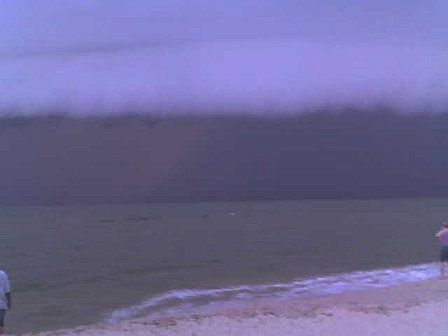
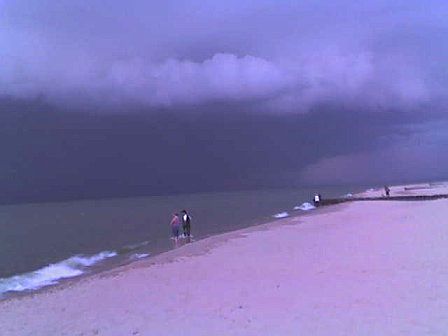
Last night it rumbled for hours here on the east side of Lake Michigan. The heat broke close to 9 pm to everyone's relief. Then the rain commenced. Sheets of it. I sat in a parking lot of a store waiting for a break. Finally I took my shoes off, grabbed a towel and swam to the door. Then I went to see the latest Pirates of the Caribbean which I know nothing about.  We lost power to constant lightning and thunder. A couple of sky-splitters kept us awake.  This was a very picturesque storm with memorable sound effects.

24 March 2006

Friday bird blog

Western woodpeckers color plate from A Field Guide to Western Birds by Roger Tory Peterson

Bird sightings reported to hotlines, cooperative extensions and nature centers tend to be exotics. The friendly birds who habituate my feeders might resent this just a tad, because they are faithful and reliable, just so long as the feeders aren’t overlooked too often. A lapse or two in dispensing our special house blend is forgiven pretty quickly. Cats minding the store are another matter altogether. Even friends have limits.

This week – maybe I should start these columns, “It’s been a slow week in …”. All the men are definitely not good-looking, however. Nix that idea. But this week, the snowy owls still are around the southern lower peninsula, Ross’ geese appear here and there on Lake Michigan, there’s a varied thrush in a very improbable spot in Muskegon County, and this week’s feature bird is the Black-backed woodpecker, a/k/a the artic three-toed woodpecker, here from the northwestern US or Canada.

I’m assuming it’s a male present in Dickinson County, which is in the UP, site of Iron Mountain and many mining towns of the late 19th Century. The black-backed woodpecker – I guess that’s his official name now – is a resident of evergreens in the high mountains of Canada and west in the US to Montana and Wyoming. Iron Mountain is a piddly hill compared to the Sierras, but when one is w-a-y off base, so to speak, one must compensate like mad.
Black-backed woodpecker, male
Dickinson County, Michigan was a minor “fever” spot in the late 1870s when iron ore was discovered. One of the town patricians of Niles, Michigan, where my father grew up, was Henry Austin Chapin, a dry goods store proprietor until his 40 acres in Dickinson County yielded a lot of lucrative mineral deposits. (“Then one day he was shootin’ at some food, And up through the ground came a bubblin’ crude.”)

The family had built a mansion which was near where my father’s family resided, though not nearly so splendidly. In 1933, the depth of the Great Depression, the Chapin family sold the house to the city of Niles for $300. at auction. Today it houses City Hall.


21 March 2006

A true Victorian lady


This day was my grandmother’s birthday. She was the matriarch of the entire family and still is, actually, even though she died in 1956. Everyone loved her, even the in-laws. Her children and their spouses didn’t analyze their parents as much as we do in my generation, but she would have stood up, regardless. My parents’ generation is all gone now, too, and my generation does not get on too well, but we all have Grandma as a lodestar.

She was of solid Yankee Protestant stock, particularly influenced by the values of the Congregational Church, like one founded by her ancestor, William Kelsey, in 1650s Connecticut. He and others of the Braintree Company removed from New Towne (later Cambridge, Massachusetts) to a spot (later Hartford) on the Connecticut River in 1635, as part of an advance team for their leader, Thomas Hooker. It is thought that the term “Yankee” was coined by the Dutch already present when William’s little band arrived on the scene from the Dutch word for “squatter” or “thief”, so he might have been among the original “Yankees”. (Demystifies it all a bit, eh?) It sounds so smug, but if ever there was an example of stalwart Yankee virtue, it was my grandmother.

Grandma probably never knew all the genealogy that I’ve dug up, although her name appears in the 4 volume Kelsey genealogy begun in the 19th Century, under the guidance of Edward Claypool, who was a prominent genealogist. Many of the stories I’d heard about names and places have turned out to be accurate, and those stories undoubtedly came from her. A Victorian through and through, she never would have called attention to herself, though. When my sister received a pretty sweater for Christmas and commented that she’d be the best dressed girl in school, Grandma remonstrated with her, because that was boastful and common. One showed one’s breeding by what one didn’t say, I suppose.

To this day, I cannot slouch in a chair. That is part of her legacy. Lazy posture was akin to moral turpitude.  Likewise, whining, rudeness, cutting corners - - all verboten. 

She was influential because she was selfless, stoic, loyal and kind. We tend to aggrandize the dear departed, but character was significant. Doing the right thing, being of service, doing a job the best one could even though no one else might ever know. All these things were expected, de rigueur, standard.

Growing up with benchmarks like those has its pitfalls. The rest of the world doesn’t operate according to Grandma’s strictures. She was a product of pioneer Protestants and Progressives, though, not swindlers and conmen, and she behaved like an aristocrat, even though she was far removed from their company.

Her name was Beatrice Hortense, a very fashionable name for 1889, the year she was born. Her mother, Marjorie Copper Kelsey, ceased naming her children after grandparents and great grandparents, choosing Albert and Blanche, as well, instead of Sarah, William or the Old Testament names adopted by their Puritan ancestors, like Moses, Zachariah and Rachel, all names in my ancestry. She must have been quite modern, possibly a consequence of life on the pioneer trail to Nebraska.

Grandma would be agog at the world today, disapproving of our lack of discipline and capitulation to materialism. Her world was hardly perfect, though, and she suffered many hardships and disappointments, but she wished for her children and grandchildren to have a better life, not necessarily one of wealth or fame, but one to make a difference even in small ways. Isn’t that what family values are all about?

17 March 2006

Friday Bird Blog

©National Geographic Society
female long-tailed duck with 7 eggs
photographed on St. Mary Islands, Quebec

Despite snow and ice, there is abundant sun here. Earlier this week, Monday and Tuesday, I believe it was, the sun was brilliant all day long. After days of gloom and fog, it feels like life is returning. Today we’ll have fairyland for a while – the trees and bushes look like they’re sugar-coated – but after a few hours of sunshine, it’ll be gone. Time for spring!

Dawn now features noisy chattering from the feathered crowd. On Sunday and Monday it was in the mid-60’s, and the robin was in full voice, notifying us of the coming rain. Rain it did.

The Michigan statewide bird report dutifully recorded each Thursday night, this week features 3900+ long-tailed ducks, formerly called oldsquaw, along Lake Michigan in Allegan County, site of many a bird walk in my days of youth. The duck’s official name was changed to conform to British nomenclature. As well, the U.S. Fish and Wildlife Service in Alaska petitioned the American Ornithologist’s Union to change the name, potentially offensive, because the bird’s declining numbers in Alaska would require cooperation from Native Americans to sustain the population.

The sand hill cranes ought to be making an appearance soon. They were like old friends on the little lake where we lived when I was very young. My mother taught me how to identify cranes and herons in flight when I was maybe three years old. I was a font of wisdom, knew the black-billed cuckoo from the yellow-billed, the cedar waxwing from the Bohemian. When you grow up with this stuff it doesn’t seem difficult at all, and, of course, a child’s impressions are so strong and clear, not muddled and over-wrought.

We have a serious robin invasion, lots of squabbles over territory. Time to put out pieces of string and hair, although robins will use just about anything to construct a domicile. Maybe I should have a contest for the most original nest.

03 March 2006

Friday bird blog

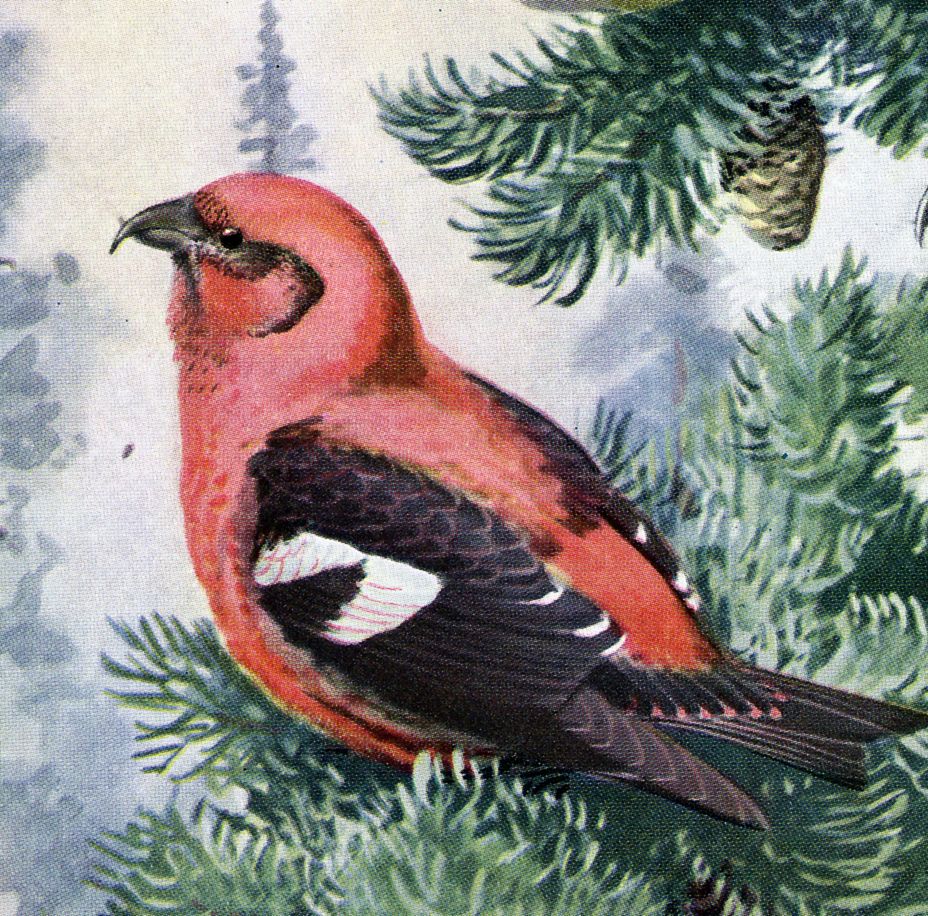
White winged crossbill
Illustration by Louis Agassiz Fuertes

Despite endless turmoil and uncertainty in the homosapien world, the birds appear unaffected. Two days ago I spied my first robin hopping about, plotting a settlement for the coming three-nester. This morning Mr. Mourning Dove was pursuing Mrs. (or Miss – can never be quite sure) Dove, puffing himself up and trying to jump her, to put an accurate spin on the scene. Crude, but nature never appropriated Victorian sensibilities.

The juncos are faithful, as are the downy woodpeckers, an occasional red-headed woodpecker, the titmice, which I love – cousin to the chickadee - how could they not be adorable – red-breasted and white-breasted nuthatches, the cardinal and blue jays, and ever-watchful crows, awaiting leftover popcorn. I made my own birdseed mix this winter, because I had lots of stale peanuts I’d bought in bulk on sale really cheap last year to make something or other and never got around to it. The can is empty, though. ‘Must restock.

It’s cold now here in Michigan. We have had little snow, though, in two months, and the tulips and narcissus are peeking through the ground. I went out the other day and cut through the landscape cloth I put down last fall, because I forgot to move a patch of daffodils. The ultimate effect will be more natural, which is what I always strive for, anyway.

The Michigan statewide bird report for yesterday mentions lots of owls again, a Bullock’s Oriole in Livingston County, which is in the southeastern quadrant of the lower peninsula, and a white-winged crossbill in Kent County, which is where Grand Rapids is located, home of Gerald Ford and where closed on Sunday has been a tradition ever since I can remember. Get the picture?

The Bullock ’s oriole is a western species and in any event is a summer bird in these parts, rarity though he may be at all times. What in the world is he doing at a feeder in Michigan in early March? Crazy weather patterns would be my guess.

The crossbill dips down from his winter range when food is scarce or the supply is running out or in extremely cold winters, which this has not been. According to the report he is chowing on the seeds in a mixed spruce and pine stand. Usually they travel in flocks, so next week we may hear of more.

25 February 2006

Argument for a professional military


A light entry into United States military history:

"By an Act of the Legislature, approved in April, 1841, it was required that the several battalions of State Militia should rendezvous for inspection, drill, service and martial exercise, in each county, between the first days of May and November of each year.


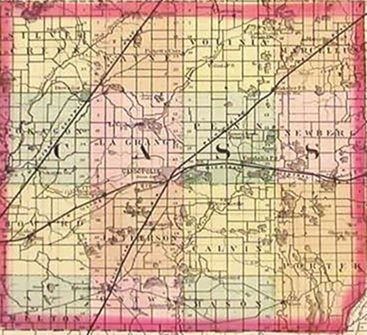
Pursuant to this, in the latter part of October, 1842, all the able bodied white male citizens of Cass County between the ages of eighteen and forty-five, were notified to rendezvous at Cassopolis for the purposes set forth in the Act.

The day proved exceedingly unfavorable, being cold and inclement with a mingled fall of rain and snow. Still, nearly one thousand sturdy yeomen assembled on the public square to receive their first lessons in the art of national defense.

They were as motley a crew as ever perplexed a drill sergeant, with shoes and without, with coats and hats, or without either. Some of them armed with rifles and shot guns, but the majority with clubs, broom-sticks and cornstalks. There was nothing uniform about them – excepting variety.


The “martial exercise” developed into the broadest burlesque on the art of war, and its glaring absurdity was evident to officers and men alike.

The instructors proving totally unqualified to teach, and the pupils soon being in no mood to receive instructions, resort was had to an exercise in which honors were easy and responsibilities equal.

Informal, but effective requisitions being made upon the officers, whiskey in barrels was rolled out on the public square and each Captain required to provide a pail and tin cups for the use of his Company.

The fun soon grew fast and furious. Friendly wrestling gave place to bellicose fisticuffs. Political and neighborhood quarrels were put in a way for adjustment, bloody noses and cracked crowns became the order of the day, and the first and only military training in the history of Cass County terminated in general debauch.”

From History of Cass County, Michigan from 1825 to 1875 by Howard Rogers (published 1875)

There are many county histories like this one available. The early westward pioneers were dying, and enterprising historians began to collect their stories, as well as the history of the towns and counties they’d founded in order to commemorate the nation’s Centennial. People were tremendously proud and were much closer to the history of the United States and its founding.


 A great-grat grandfather, Abner Kelsey, was part of this rendezvous of Michigan militia.  He made his way to California twice during the Gold Rush, and one of his sons settled in Tulare County where he opened a butcher shop.  Two other sons fought in the Civil War, and one, John, was killed.  It may be that the other son fought for the Confederacy, though I have yet to confirm.  Abner was an early Michigan settler, though the whole family apparently had wanderlust.  I can't imagine traveling all the way to California from the Midwest in the 1840s- twice.  Amazing.

08 February 2006

Spring songs

Illustration by Allan Brooks
About this time of year I start listening for the cardinal on sunny mornings. He is readying his claim to a nesting territory and impressing the ladies. It is one of the most beautiful sounds in nature for those of us who might have cabin fever or snow fatigue. This year (so far – always must qualify in the unpredictable Midwest) winter has been modest, so perhaps we can expect a timely spring. Another possibility is a cold May followed by a 90-degree June. Still, the memory of warm breezes scattering the apple blossoms on the orchard floor and morel mushrooms sprouting up after a rain invites even skeptics to imagine a joyous rebirth.

This a.m. I did hear not only Mr. Cardinal but a robin in the distance. He no doubt is a year round resident, as fewer robins migrate than they used to. However, we’ll take his song, even if it means he’s just in from a nearby woods.

In Michigan there is a tempest in the state legislature over the state bird. It has been the robin from the beginning. Others advocate for the Jack Pine, or Kirtland’s, warbler because its only nesting ground on the entire planet is the scrub pine lands in the north central region of the lower peninsula. Still others are pushing for the chickadee. It takes a cold heart to reject a chickadee.

Predictably, the grumpy among the elected representatives claim that the state has more important business to attend to. That position is guaranteed not to stir controversy.

05 February 2006

Studying seed catalogs


We’re back to winter in the old Midwest. January was like March. My parsley was still green, my volunteer bachelor’s buttons were healthy looking, cabbage plantlings I’d put in and forgotten about were still alive. Without any snow cover, if the temperature had been normal, they’d have been iced. Snow is a wonderful insulator, and I believe the soil is still moisture deficient, although there was quite a lot of rain in November.

It’s blustery outside and the type of winter evening seed catalog merchants count on to boost sales. Even though I am likely to be a transient once again this summer, I am damned well going to have some plants – somewhere. I love seed catalogs. Select Seeds in Union, Connecticut for heirloom flowers, Cook’s Garden Seeds, Johnny’s Selected Seeds in Albion, Maine and Seeds of Change in New Mexico fro vegetables are my favorites. Shepherd’s used to have wonderful seeds, as well, but I believe they were acquired by the White Flower Farm and then deep-sixed. They never disappointed me. Burpee’s is always reliable, too.

If I had my way, I’d turn my front yard, if possible, into a space to grow edible crops, as well as the back. At the very least native plants would take the place of some of the turf grass. I’d leave some dandelions, although I have a dandy tool with which to dig them out. The bees need the early pollen, starting with crocuses. When they’re spent, there can be a lag before the really good stuff blooms.

For several years I have dreamed of buying some land for a market garden. A handy water source and excellent soil fertility, sun (natch) are all I ask. Farm land around here runs around $5000. per acre. Agriland that’s been Dowed and Monsantoed is easy to come by, but I want land that hasn’t been wrecked by chemicals. My late uncle’s assisted living facility was built on an old orchard. Last June I walked around the property and found German Chamomile growing everywhere. Those old fashioned farmers knew what they were doing. There isn’t much of anything that German chamomile won’t help, because it attracts beneficial insects. I’m sure the farmer sprayed the trees, but the soil might not be as compromised.

Incorporated areas nearly always have restrictions on the type of dwelling one can situate on his land. Consequently I may have to go away from civilization and into fundie/survivalist country. They might appreciate someone like me. Who knows? What’s the name of that book? Oh, yes. Jesus Land. Well, that was Indiana. World of difference between Michigan and Indiana. (apologies to any I may have offended. Indiana is beautiful and the birthplace of Abraham Lincoln. I’ve been there.)

For the immediate future I may stick to hybrid tomatoes. The heirlooms need excellent soil conditions, and some don’t yield nearly as well as the hybrids. The last two years I grew a rare heirloom, red calabash, which I bought from Seeds of Change. It is prolific, but small, about twice the size of a good size cherry tomato, but does not hold too awfully long on the vine. My purple Cherokee did nothing last year, but I think the soil is the reason. Marmande, a 6 ounce heirloom, was also good.

Among the F1 hybrids, Juliet is a definite winner – prolific and good tasting. I ate dozens right off the vine. Nothing like a sun-warmed tomato. It is a plum variety.
The best all-around hybrid for my neck of the woods is Better Boy (Burpee). It is great for canning, eating, has a good shelf life and is very tasty.

A neighbor wants me to find him some certified Rutgers seed. Rutgers is a parent of the tomato Cambell’s soup uses. My brother always grows them. If I had a large enough space I could experiment.

There is something wonderful about being able to grow some of one’s own food. Work never runs out, but the effort is worth it, especially if you can preserve something for winter. Home canned tomatoes over pasta with a little Parmesan cheese is a divine concoction. My parents used to give me home canned tomatoes for Christmas. As good as a bottle of Champagne – better – and I am a Champagne girl.

There was an organic herb farm for sale around here a few years back. It was one of my favorite businesses in these parts, and they even had a little lunchtime restaurant. The proprietors’ children didn’t want to carry on the business, so they had it on the market for about $550,000. They worked seven days a week about 10 months a year, but it was spectacular. Heaven.

Well, I am bookmarking sources. Michigan has a land use institute. The cooperative extensions also can be good resources. I have one of Eliot Coleman’s books. Who knows. One of my ancestors – a great great grandmother, I believe - walked to market a couple of miles each way when she was in her ‘80s. Many such lived to be 100. My heart is in the city, but owning land is a big deal to me. Irish. Wasn’t that what Scarlett’s father told her?

27 January 2006

Happy Birthday, Wolfgang!


There is a God. For all the tragedy and senseless waste cluttering history, every so often beauty and genius are aligned. Mozart didn't have an easy life, but his short time here left us with evidence of the sublime, which lives beyond our quotidian understanding. What a magnificent gift.

23 January 2006

Apologetic make-up bird blog

Illustrations, Louis Aggasiz Fuertes

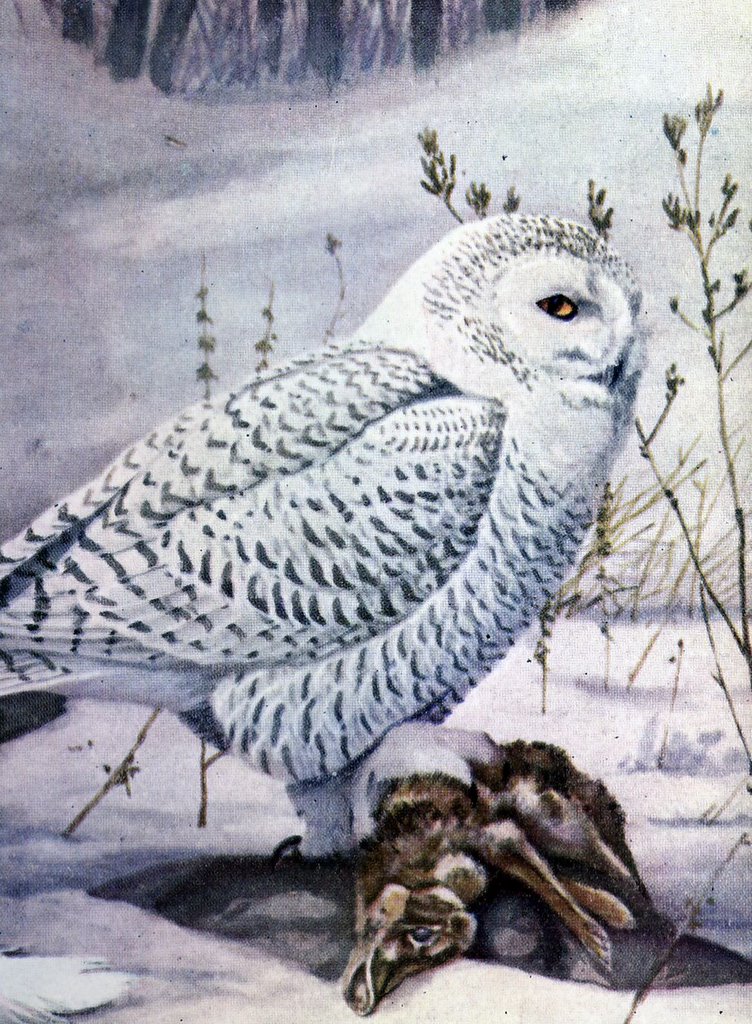
Mrs. Snowy Owl is diurnal which means she hunts during the daylight hours. She doesn’t say much from her winter perch which will be found close to the ground where the mice are. The snowy owl saves its talk for its breeding grounds in the Artic tundra. Every year a few dip down into the Great Lakes and Cape Cod.

They have the longest wing span of any North American owl and tip the scales at 3.5 pounds on average. Mouse must be fattening, because Charles the cat’s vet observed that he hadn’t missed many meals, and he has an outside gig featuring frequent mouse dinners.

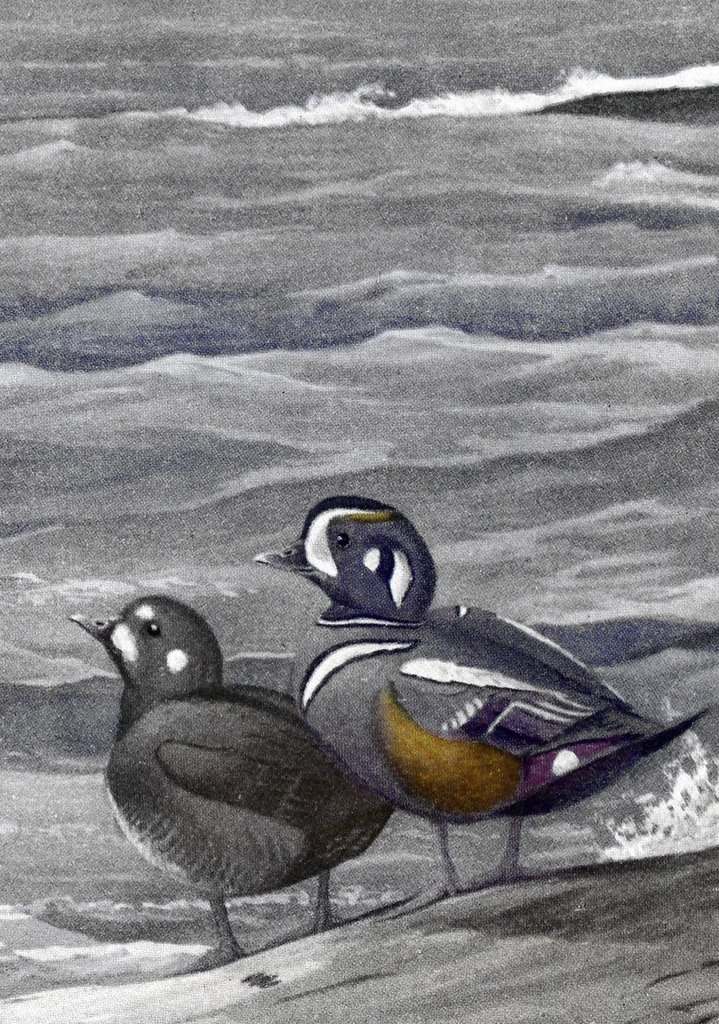
The Michigan statewide bird report for the last three weeks has chronicled snowy owls all over the state. I haven’t heard of the Willet again, but there’s a varied thrush (the robin’s family) in Manistee County, which is in the northern half of the lower peninsula, and male and female Harlequin ducks near me, so I’d better get over there to see if I can’t spot them.


16 January 2006

A little Victoriana


My father acquired this book at an auction about 40 years ago. He was a restaurateur and then ran the dietary department for the local hospital. In the Army he was a medic in a collecting company and doubled as the field chow chief. He knew just about everything about food, not haute cuisine exactly, but I never ate anything he made that wasn’t great.

He loved this book all to pieces. Its shrill admonitions and bald opinions kept us all laughing.  Example:

”But in most American families, the largest amount of waste, probably, takes place in the use of fuel. Heretofore, fuel of all kinds has been comparatively cheap, and very little supervision has been exercised over its use. At present rates however, it is an item of considerable importance, and it is quite time that servants were taught how to employ it to the best advantage.

The general principle of construction upon which American kitchen stoves and ranges is based, renders them either very economical, or very much otherwise, according to the way they are managed. After the fire is first built in an ordinary stove, or range, the dampers ought all to be closed up and not opened again during the day, except while broiling, or something of that sort. If the grate is kept clear, and the fire replenished with a small quantity of coal, before it begins to get low, both the oven and the top of the range will be kept sufficiently hot for any kind of cooking, and it will be done all the better for being done somewhat more slowly, than is customary with the well meaning, but terribly blundering and irresponsible race of wild Irish girls, who officiate as the high priestesses of our domestic altars.”

My father’s mother was Katie O’Connell, 100% Irish and not the least bit wild. I can still hear him laughing at the Victorian presumption of superiority of the Mrs. J. C. Crolys of the world. Anglo racism is nothing new. That’s why Catholic universities were/are considered inferior and the story of the Irish monks in the Dark Ages, keeping learning alive, was suppressed for so long. I keep hoping to find a tie to Daniel O’Connell, the Liberator, as my grandmother’s father departed County Kerry, near Castle Island, and the Liberator was a Kerry man.

Here’s another suggestion from the quill of Jennie June:
“Good brooms and brushes will last a long time if care is taken of them. When first bought they should be allowed to stand in cold water for twelve hours, and then thoroughly dried before use. When not in use they should be hung up on a loop of twine or cord so that the weight may not rest on the edge of the splinters and break them. Four large brooms should be provided, one for the kitchen, one for the parlor, one for the sleeping rooms, and one for the family, or “living” room. A whisk will be required for every room in the house, besides one for the hall.

As soon as the kitchen broom is worn down so as to render it unfit to sweep the floor with ease and comfort, take it for the cellar, door steps and back yard; take the one from the sitting room for the kitchen, the one from the parlor to the sitting room, and get a new one for the parlor.”

Whew.

“Susan B. Anthony’s Apple Tapioca Pudding

Susan B. Anthony is an excellent cook and housekeeper, and it was a proverb at home that when Susan did the housekeeping, the meals were always punctual and well served. She believes in a plain simple diet and the following is her favorite pudding:

Peel and core eight apples, fill them with sugar in which a little nutmeg has been grated. Take a cupful of tapioca, which has been all night soaking in water, Add to it a little milk or water if needed, and pour it around the apples, which have been laid in a buttered dish. Bake slowly one hour, and serve with cream and powdered sugar. It is good hot or cold, the tapioca forming a jelly around the apples”

Jennie June’s Cookbook was published in 1878.

07 January 2006

Miracle on the New Jersey Turnpike


There was another cat in the news this week. Another stowaway. Why do I feel like I am in an echo chamber? Hello? Hello? Hello?

This time the cat was in New Jersey where they have an Animal Welfare League. America, haven’t you had enough of the government stealing your money to give away to lazy fools? They toil not, neither do they spin. An Animal Welfare League? It strains my brain.

They named the sponge Miracle. There’s no miracle here, Folks. There’s been a robbery, though.

My new blog is open and ready for business. I have to share a computer, though. Supposedly management is working on something “serious”. Huh. Every time I look up she’s playing Free Cell or checking her eBay auctions. Don’t hold your breath.

06 January 2006

A Poem for Epiphany


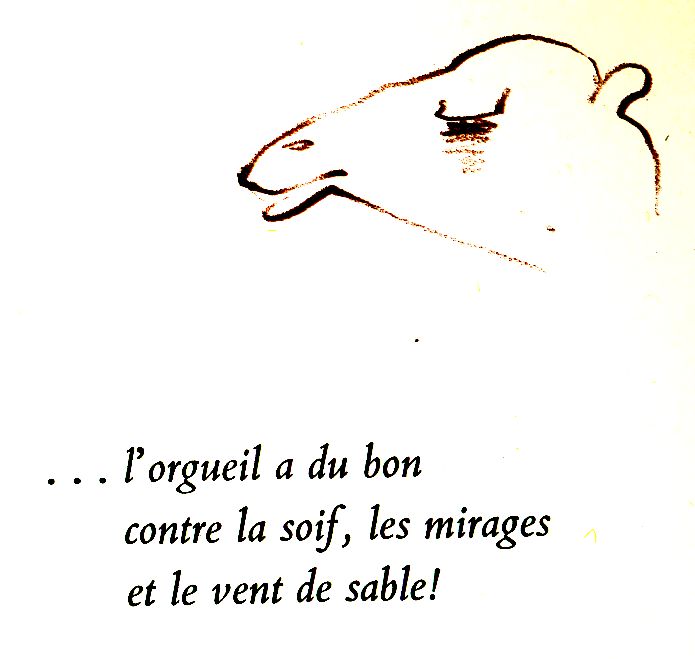
The Camel

Lord,
do not be displeased.
There is something to be said for pride
against thirst, mirages,
and sandstorms;
and I must say
that, to face and rise above
these arid desert dramas,
two humps
are not too many,
nor an arrogant lip.
Some people criticize
my four flat feet,
the base of my pile of joints,
but what should I do
with high heels
crossing so much country,
such shifting dreams,
while upholding my dignity?
My heart wrung
by the cries of jackals and hyenas,
by the burning silence,
the magnitude of Your cold stars,
I give You thanks, Lord,
for this my realm,
wide as my longings
and the passage of my steps.
Carrying my royalty
in the aristocratic curve of my neck
from oasis to oasis,
one day shall I find again
the caravan of the magi?
And the gates of Your paradise?
Amen.

~ Carmen Bernos de Gasztold ~
from
The Creatures’ Choir

03 January 2006

Creature Feature: a better kind of survival

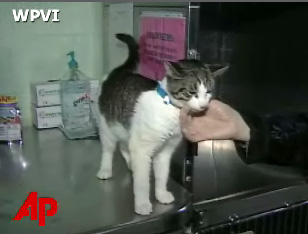
AP photo (Canadian Press)
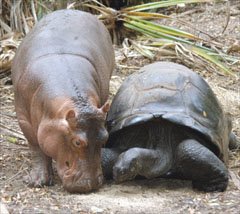
Everyone has seen this by now, I bet, but it makes me happy to think about it. This was taken on their one-year anniversary.
A year ago I made donations to Doctors without Borders and Oxfam. Both wrote and asked if the contributions, made for tsunami victims, might be directed to another of their programs, because the response for tsunami relief efforts was off the charts. The world's response was unprecedented. The billions in relief dollars, though, cannot blot out the anguish survivors will feel for the rest of their lives. How do humans deal with the loss of everyone they hold closest to their hearts? How do they "rebuild" their lives, their very identities?

This excerpt from an Outlook India.com article entitled "Tsunami relief: the darker side" shows once again how human nature constrains us, but unites us, as well: "Liquor shops and business establishments in Karaikal are witnessing a boom after the tsunami. Many people from Nagapattinam come here to shop for liquor, electronic goods, two wheelers and dress materials," says Kumaraswamy, a textile shop owner in Karaikal."In recent months, there has been a sharp increase of customers from Nagapattinam and Cuddalore, especially the fishermen, with many of them making purchases worth thousands of rupees," Kumaraswamy says. Karaikal is the preferred destination for such tsunami survivors because of two reasons - reduced prices at the Union Territory and anonymity from the prying eyes of local residents in Nagapattinam.

"We have been monitoring such cases and have advised such people to desist from these practices. Though the trend of spending money recklessly is prevalent among our community, we are convincing them to invest it in fixed deposit and in co-operative welfare schemes," says Mathiyazhakan, head of the fishermen's village panchayat in Akkarapettai - one of the worst-hit hamlets in this district."

Modern culture can pretty much be defined by the number and variety of diversions from reality it provides. Escapism. Denial. Are the fishermen of Akkarapettai finding a place at the flat earth table on account of their unspeakable losses? Would David Brooks or Thomas Friedman find a serendipitous angle to the story? Probably.

You note that the spokesman for the fishing village isn't talking interms of cowboy "freedom" and go-it-alone survival. He speaks of a co-operative venture. There is no other way they can hope to rise above the tragedy and try to find any peace at all within themselves. It can come only as a mutual effort and shared recovery.

30 December 2005

Friday Bird Blog: Who-o Am I ?

Illustration by
Louis Agassiz Fuertes
My sister lives on a former prairie, farm and woods, all three sacrificed to development. Her site, though, overlooks a preserve where, so they tell her, no building will ever occur. The landscapers even do controlled burns and scatter seeds of native prairie plants each year to help nature along if the burns don’t sufficiently resuscitate the flora and fauna. She has the best view of any, and that’s as it should be, considering her love of the wild things that are looking to reestablish a home base.

On Christmas night, after our fĂȘte, she heard her owl, so she and her daughter Amanda and I went out to stand still and listen. Sure enough. Hoo-hoo-hoo. Hoo hoo.

“Not the Screech Owl,” said we. He is named for his call, a sound almost like a glass harmonica, or an eerie whistle. Our visitor’s voice was resonant and deep.

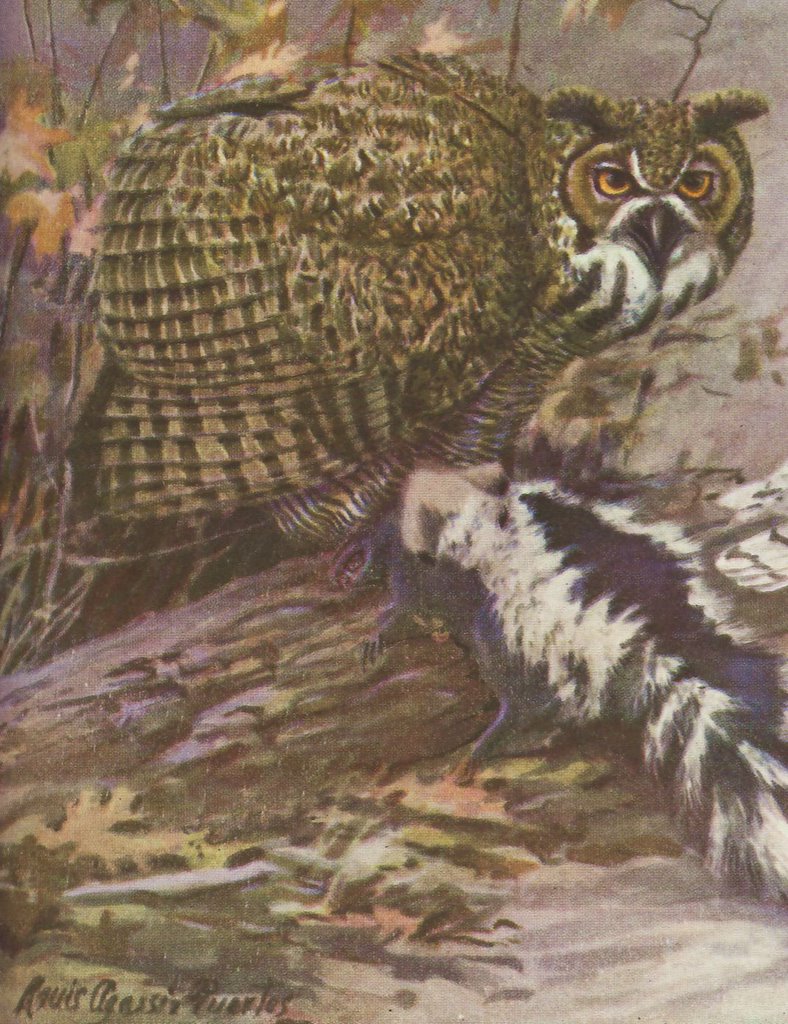
I didn’t have time to look up her owl-in-residence until just now. What we heard was the Great Horned Owl, a male announcing his GPS locus. According to the bird books, he isn’t friendly, but, hell, how would you act if crazy, destructive humans kept you on the run? He is among the most adaptable of the owls, however. His diet is small animals, unlike the Screech Owl, who prefers mice.

My sister’s cat, Charles, prefers mice, too. I was concerned that he might run into more competition that he’d bargained for, if the owl was looking for mice. As it turns out, the owl might be looking for Chuck. The picture here shows a deceased skunk in its talons. Charles has encountered skunks, as well, in his travels, and FYI, giving a cat a tomato juice bath (the home remedy for skunked puddy cat) is both dangerous and a waste of time and tomato juice. Just ask Chuck.

This
link has a succinct description and audio links with its call. Woo hoo!

26 December 2005

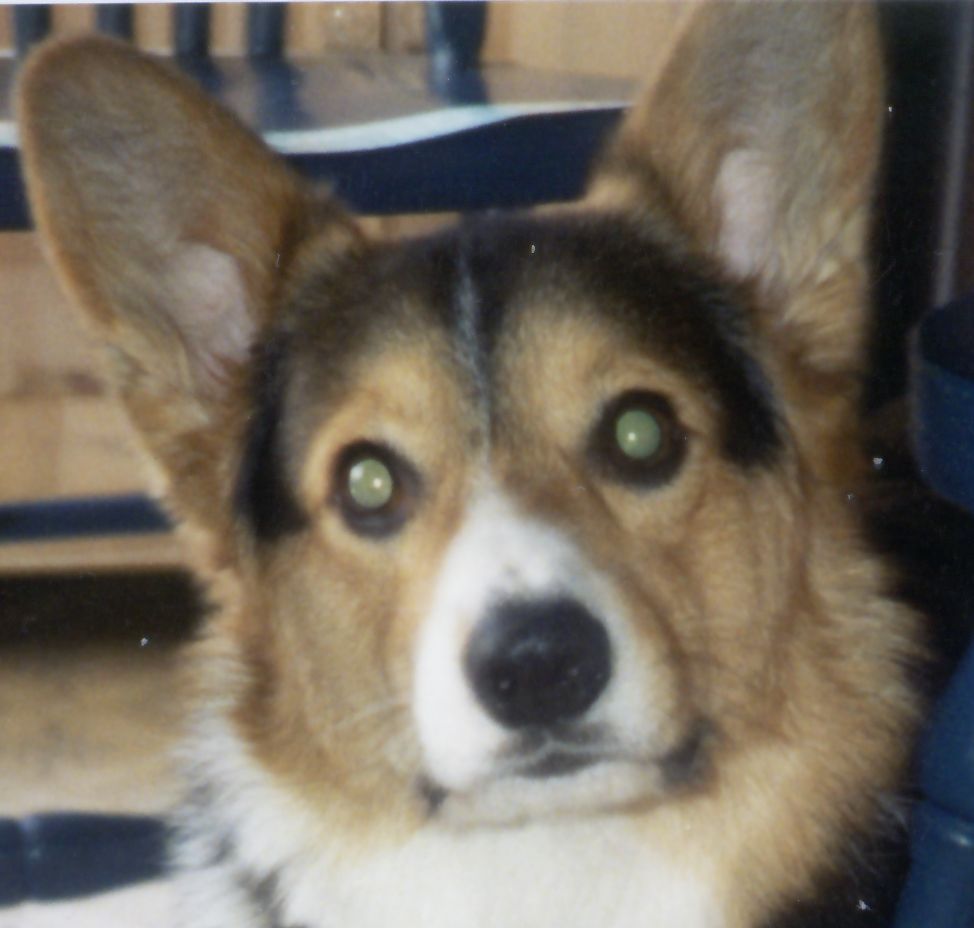
Boxing Day Greetings from Arthur


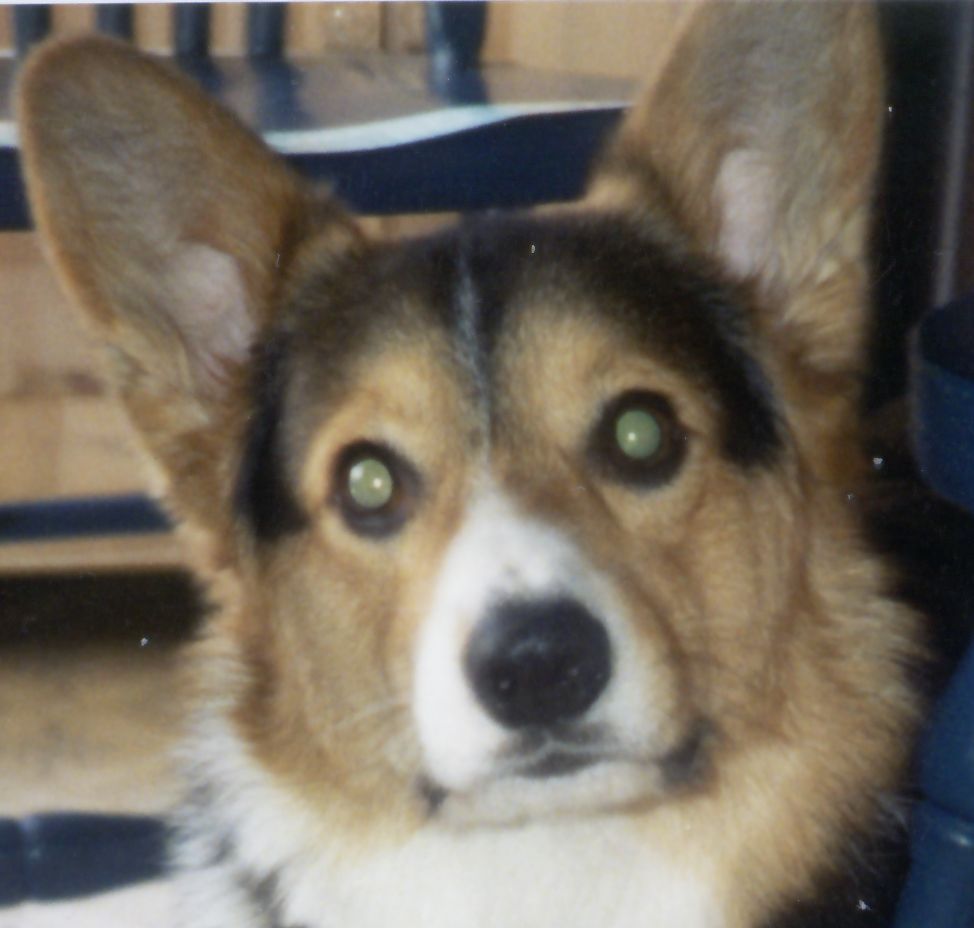
Today is Boxing Day in Jolly Olde England. Even though I am a Welsh American, I appreciate the Queen. She has such excellent taste in canine companions.

On Boxing Day masters are supposed to give their servants presents. Most of my dog friends celebrate Christmas, because they are part of the family. For example, I got cards from Winston and Truman, my Maltese cousins in Iowa; Butch Brand, my cousin in Elmhurst; Rock Parker, a really cool guy who lives in my old neighborhood; and an email from my friend Jim. He is not a dog. All were Christmas cards, so you can easily see I am not a servant.

I don’t understand why the servant dogs don’t just pull themselves up like I did after I was sold by the breeder for $350.00. That’s quite a body blow, to be sold for only $350.00. But I would not quit until I reached the top. I spell 'luck'
'w-o-r-k'.

Quite a few cats sent us cards, too, but they can get their own blog column.

Speaking of, here’s how the freeloading dopes celebrated Christmas. First, they got catnip from management, but I happen to know that it isn’t a new package. It’s the same old cat nip she gives them on Saturday nights. Then “Santa” provided a gift from Hartz Mountain, whatever that is. It is a Wacky Mouse 3-Pack. There are 3 calico catnip fake mice with a jingle bell on the rear end. Big Whup. Since the cats can’t count, I ate two of them, and now they are fighting over the last one. Management will think they lost the other two. Ho ho ho. This is so funny.

Catnip gives you the munchies, though. I wish management knew someone who would buy her a box of Godiva chocolates. She’s too cheap to buy them herself.

24 December 2005

Peace on Earth


'Listening to some wonderful harp arrangements of Christmas music. I think I can go to bed in about an hour if I don't fool around at all. 'Traveling Christmas morning. A lovely day to all. be safe and happy. Merry Christmas!

23 December 2005

Friday Bird Blog: A Wandering Willet

Illustration by Louis Agassiz Fuertes
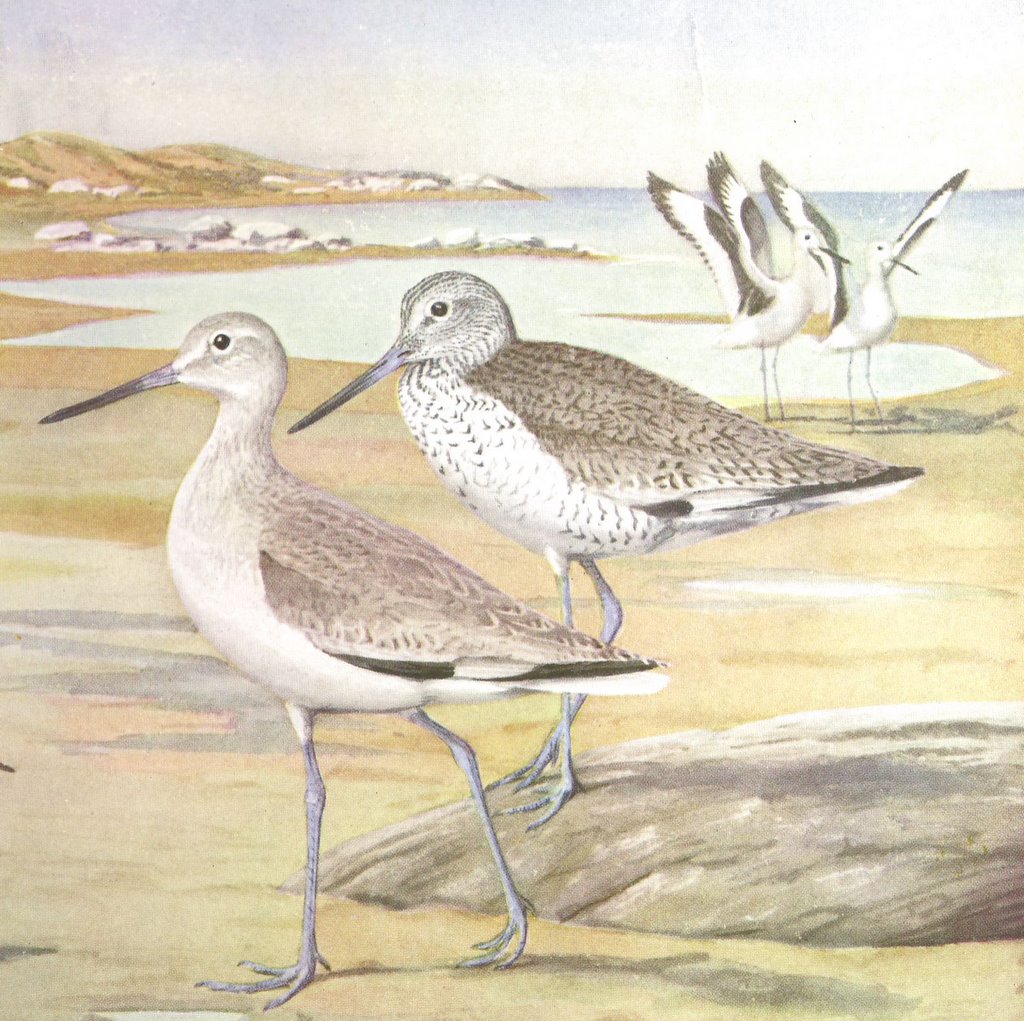
l. Western Willet, r. Eastern Willet

A Willet is lodging at the Whiting Power plant discharge canal in Monroe County, Michigan. It has been sighted there since November 25th and was counted in the official Christmas bird count recorded on December 17th by the local enumerators. As I think I mentioned before, a census of the bird population takes place every year at this time. The period this season during which bird watchers, generally organized by an Audubon chapter, will identify and take note of all birds who happen to present themselves within a specified area is December 14th to January 5th, 2006.

The Willet, either a Western or Eastern subspecies, is not supposed to be in Erie, Michigan in December. Normally, the ones I’ve seen along the Lake Michigan shoreline are packing their bags for the trip south already in late July. They are Specialty birds in these parts, as their breeding and winter ranges – eastern or western – are along both ocean coasts. Here is a summer distribution map provided by the us gov:

The map doesn’t distinguish between Catoptrophorus semipalmatus semipalmatus (the Eastern Willet) and Catoptrophorus semipalnatus inornatus (his Western cousin). In the late 19th Century Willet eggs were a prized delicacy and the birds were a sporting target, so the dangerous homo sapiens put a serious dent in the population. The subspecies are nearly impossible to tell apart unless they happen to be together at a family reunion or something. A single bird among other species would be very tough to identify.

The Monroe County specimen found a pleasant and welcoming niche at the Whiting power plant. Whiting is a coal fired facility, not a nuclear one, and it has won good citizen awards for environmental stewardship from the state of Michigan and nature and environmental groups. Where native human populations manage to stay put for a few generations it seems to me that they – or many of them – take note of their surroundings and resent it if the landscape and its inhabitants start to disappear. (This rule would not apply to real estate developers and their backers.)

The employees at the Whiting facility, a Consumer’s Energy (formerly Consumer’s Power) plant, maintain a wildflower meadow, and a local Lotus club tends a pond where a native species was found to thrive. They alone can harvest the seed and propagate it.

Through the years I noted that many birds find their way to the Whiting plant, and birders know to go there, of course. Whiting has been around since the early ‘50s, so it, too, is part of the local scene. Its web site lists how much tax it pays to the local authorities and how the employees, as well, support local commerce. All true. Too bad we can’t get a clue about energy use.

(By the way, I just learned that Consumer’s is putting its Palisades nuclear plant, located on Lake Michigan’s eastern shore, up for sale. There are 5 or 6 nuclear plants on the southern tip of Lake Michigan.)


NOTE: Blogger is a pain in the backside today. I'll try to upload other images later. GRRRR!
02 December 2005

A nitwit cat from Neenah


As usual, America is succumbing to liberalism and low moral standards. This time it is over a stupid cat named Emily that walked into a crate and ended up in France. Friends, what about personal responsibility? What about consequences? The nanny welfare state is to blame. These leftists and liberals love a story like Emily the careless cat. I hope my tax dollars aren’t going to pay for this. Management is all glowing about a cat rescue. I can’t even get her to take me for a walk. ‘Think I’ll go pee in the dining room again. That’ll get her attention.


Photo AP/Darren Hauck

18 November 2005

Friday Bird Blog

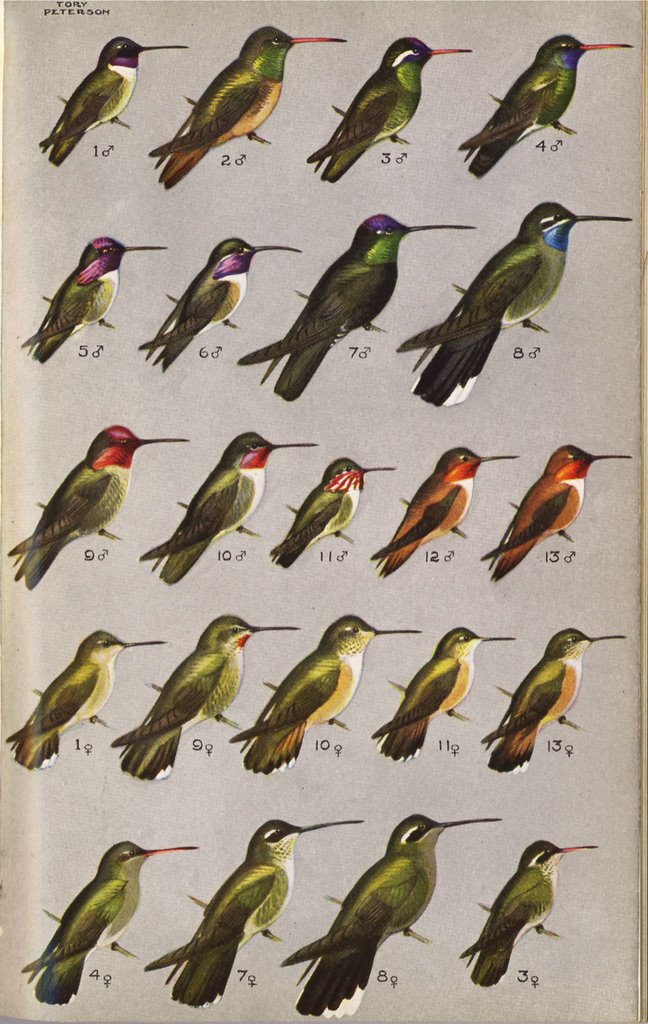
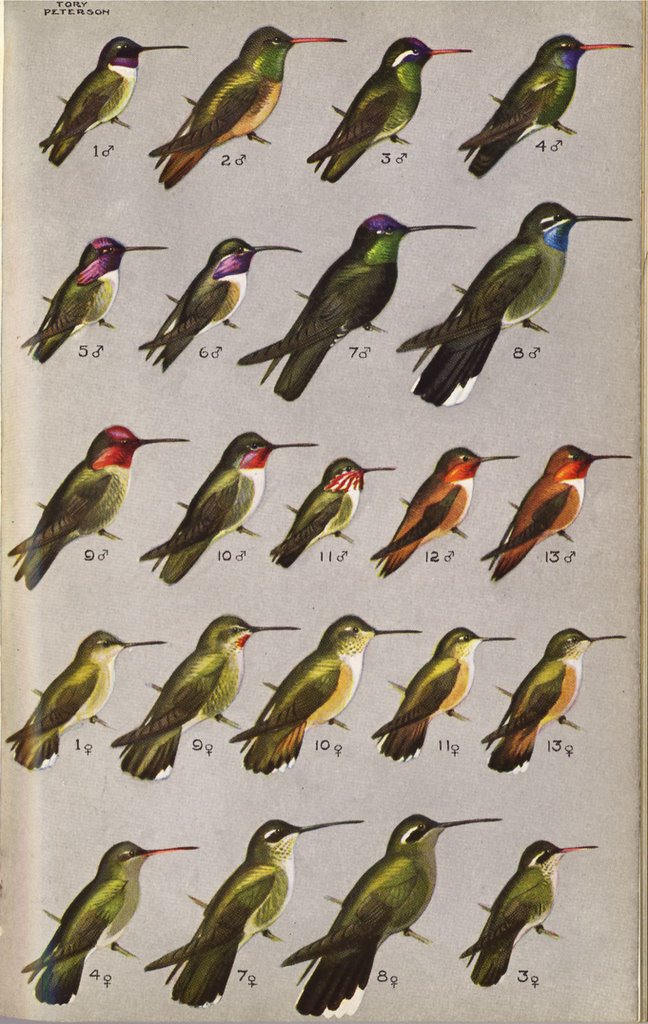
Western Hummingbirds
A plate from A Field Guide to Western Birds.
Illustrations by
Roger Tory Peterson

On Thursdays when I remember to do it I call the Michigan Statewide Bird Report hotline to see what unusual sightings people have called in during the past week. Yesterday’s report had the following:

In Livingston County, an immature Rufous Hummingbird has been hanging out at a home birdfeeder in the town of Brighton. At least he still was there on November 16. Birders are welcome to park sensibly and go around to the back yard where the feeder is. (Does this sound like A Prairie Home Companion?)

The Rufous Hummingbird is a native of the western United States, but there are occasional, but still rare, sightings in the Midwest. As a rule of thumb all hummingbird feeders should be taken down in late August or early September in places where the winter means business. Several years ago in Wisconsin, a Rufous Hummingbird was taken captive by the Milwaukee Mitchell Park Conservatory (a wonderful place), because he/she was still lapping up the sugar water in November.
Roufus Hummingbirds
Illustration by Louis Agassiz Fuertes


Next, in Wayne County Cave Swallows were seen at the Lake Erie State Game Area Pointe Mouillee and they crossed over into Monroe County, too. Apparently the Monroe County trolls are hibernating already, as there is no report of fines for trespassing. Michigan is broke, so don’t think for a minute that I’m kidding. Michigan and Ohio went to war over the Toledo line, which was part of Monroe, in the 1830s. Ohio got Toledo. Michigan got the Upper Peninsula, pasties, bears and copper. Monroe is still pissed off. But they should be glad to have some big-hearted Texas swallows visiting. This might be an effect of the hurricanes.

There was a Ross’ Goose in Muskegon County from November 8-13.

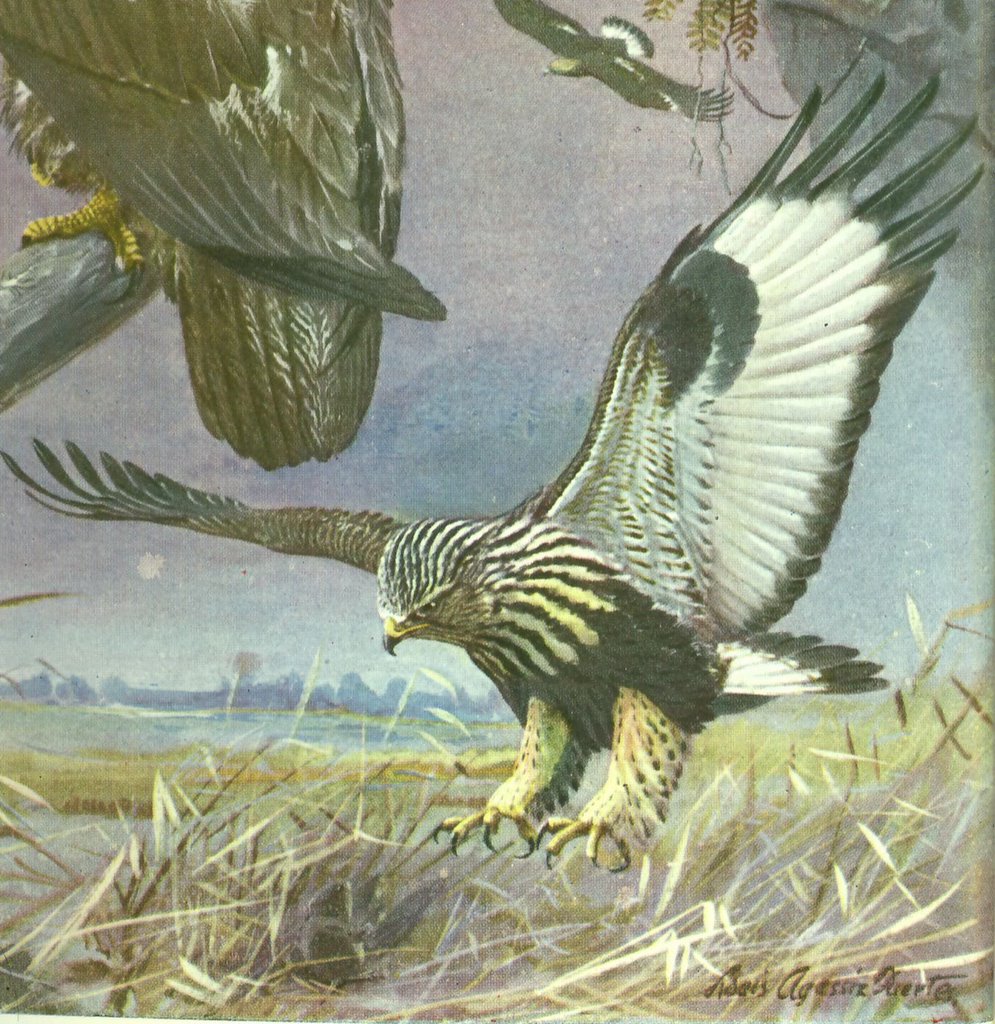
And in Allegan County at the Todd Farm, an immature Golden Eagle was present on November 12. The Todd Farm in days gone by was a major oasis, a pit stop for migrating Canada Geese. But they don’t migrate any more, I guess. Every year we’d make the trek to Fennville, Michigan to gaze at probably 100,000 geese, stop at the cider mill, buy apples for the Thanksgiving apple pies – which my father baked – he was an excellent cook – and probably we’d have taken sandwiches along and a Thermos of coffee.

Finally a Great Gray Owl was present at the Tahquamenon Falls State Park in Newberry in the UP. The Tahquamenon Falls are spectacular by the way. I’ve not been there in the gloom of November, but I like rugged weather. Just not in May.

Immature Golden Eagle.